Silver prices are at historic levels!
Silver has captivated collectors and households for centuries. Beyond its luster, silver carries real monetary value, especially in the form of coins and flatware. Families often discover that a chest of sterling flatware or a roll of old coins passed down through generations is worth far more than they imagined.
Since 1980, Design One Jewelers has helped generations of families understand the worth of their silver and make confident decisions about selling.
Whether you’re evaluating a family heirloom set of Gorham flatware, a collection of U.S. Morgan dollars, or a handful of sterling serving spoons, knowing what determines value is the first step.
Contents
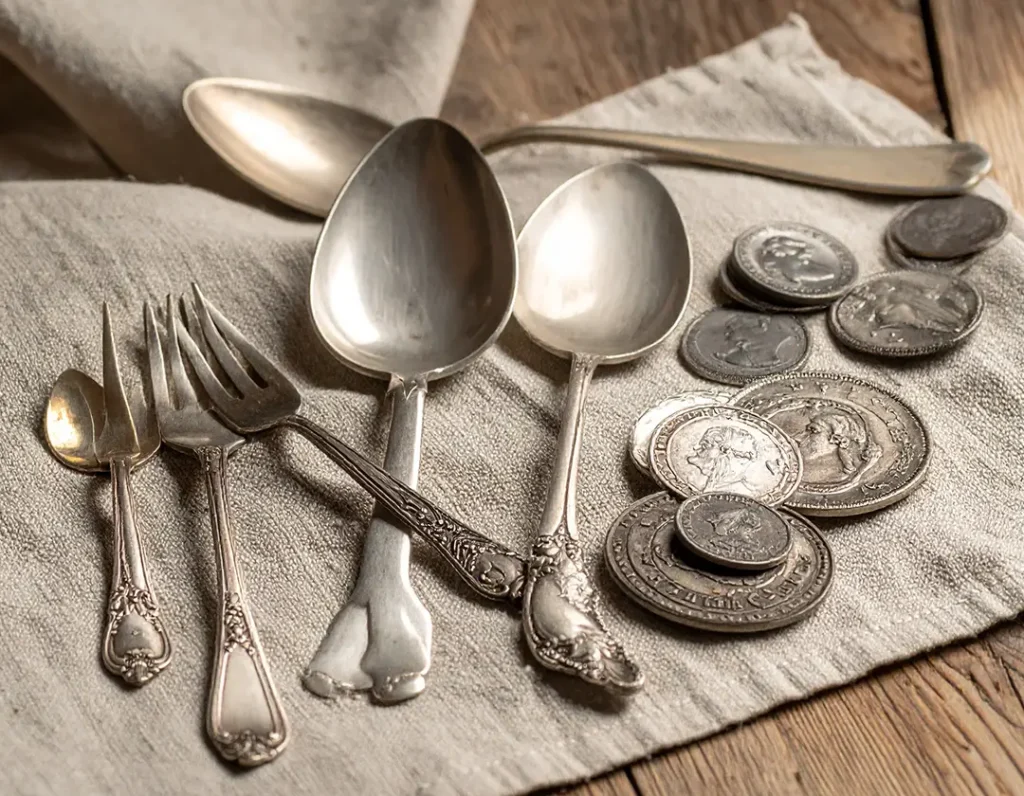
Understanding the Value of Silver
Silver is often overlooked, yet many households have valuable sterling pieces stored away in drawers or cabinets.
Purity and Metal Content
The foundation of silver’s value is its purity. Sterling silver, the most common standard for coins and flatware, contains 92.5% pure silver and 7.5% alloy metals for durability. Other alloys or plated items contain far less. Many coins, especially modern bullion issues, are marked “.999 fine silver,” indicating nearly pure content.
Hallmarks on flatware often reveal purity as well. Look for markings such as “925,” “Sterling,” or “.925.” Anything labeled “EPNS” (Electroplated Nickel Silver) or “Silver Plate” contains only a thin surface layer of silver.

Weight and Volume
Silver is typically sold by weight. Coins and flatware are weighed on precision scales, then multiplied by the daily silver rate to establish their base value. For instance, a heavy sterling serving ladle will generally be worth more than a delicate dessert fork simply because of its silver content.
Market Pricing
Like gold, silver prices fluctuate throughout the trading day. At Design One, we establish our buying rate each morning based on the live silver market and use that consistent figure throughout the day. This approach creates fairness for both clients and our store, ensuring you don’t feel penalized by a small market fluctuation that happens after you arrive.
What Gives Silver Coins Extra Value
Not all coins are equal. While every genuine silver coin contains some intrinsic metal value, additional factors can raise a coin’s worth far beyond its silver content.

Historical Significance
Coins tied to historical moments or minted during short production runs are especially prized. For example:
- U.S. Morgan Dollars (1878–1904, 1921): Famous for their size and artistry, some mint years carry high premiums.
- Peace Dollars (1921–1935): Known for their elegant design, especially the high-relief 1921 issue.
- Older U.S. dimes, quarters, and half-dollars (pre-1965): These contain 90% silver and are often collected in “junk silver” lots.
Condition and Grading
Collectibility and Demand
What Makes Silver Flatware Valuable
Flatware is a category where both silver content and craftsmanship matter. Many households still have inherited sets stored away, rarely used but often highly valuable.

Sterling vs. Silver-Plated
The most important distinction is whether the flatware is sterling or plated.
Sterling silver flatware, stamped with “Sterling” or “925,” has intrinsic silver value that scales with weight.
Silver-plated flatware, while attractive for use, contains very little silver and rarely has resale value beyond decorative or sentimental appeal.
Age, Craftsmanship, and Brand Recognition
Certain manufacturers are especially collectible:
- Tiffany & Co.: Known for elegant, enduring patterns.
- Gorham: A favorite among collectors, especially antique designs.
- International Silver Company: Produced sterling and plated sets, so markings matter.
- Towle and Reed & Barton: Well-respected for quality and design variety.
Craftsmanship and artistry can sometimes enhance value significantly. Hand-chased or repoussé designs often stand out, as do discontinued patterns no longer in production.
Completeness and Condition
A complete 12-place setting with serving utensils may bring significantly more than individual pieces. However, don’t dismiss single pieces: sterling spoons, forks, or servers still have measurable silver weight and value. Incomplete sets from premium brands can also interest buyers looking to replace lost pieces.
Other Factors That Add Value
- Monograms and Engravings: While sometimes reducing collector appeal, unique engravings may add charm for certain buyers.
- Rarity of Pattern or Minting: Some patterns were only produced for a few years, making them scarce.
- Current Demand: Trends shift. Right now, younger buyers are rediscovering sterling flatware for weddings and entertaining, which can raise resale value.
FAQs About Silver Coins and Flatware
How do I know if my silver coins are valuable beyond their metal content?
Rarity, condition, and historical significance all play a role. For example, a common-date Morgan dollar may only bring its silver value, while a scarce 1893-S Morgan could be worth thousands.
My flatware set is missing pieces. Is it still worth bringing in?
Yes. White gold is made by alloying pure gold with metals like nickel or palladium, then often coated with rhodium for shine. It is just as genuine as yellow or rose gold.
Do you buy foreign silver coins?
Yes! Popular examples include Canadian Maple Leafs, British Britannias, and Mexican Libertads, all of which are .999 fine silver.
Should I polish my silver before bringing it in?
No need. Over-polishing can actually harm certain finishes. We prefer to see silver in its natural state, and tarnish does not reduce metal value.
What’s the difference between sterling and coin silver?
Sterling contains 92.5% silver, while coin silver, common in older U.S. pieces, is around 90% silver. Both are valuable, but sterling is more common in flatware.
How do you set silver prices each day?
Like gold, we check live market prices each morning and establish a daily rate. This protects both you and our store from intraday fluctuations.
Are silver-plated items worth anything?
While most silver-plated pieces don’t hold melt value, some antique patterns or branded designs may appeal to collectors. Bring them in, and we’ll help you evaluate.
Do coins lose value if they’re scratched or worn?
They may lose collector premiums (referred to in the trade as numismatic value), but the silver content remains valuable. Even heavily circulated coins are worth evaluating.
Can I sell serving utensils separately from a set?
Yes. Large serving spoons, ladles, and knives often contain more silver than standard utensils and are priced by weight.
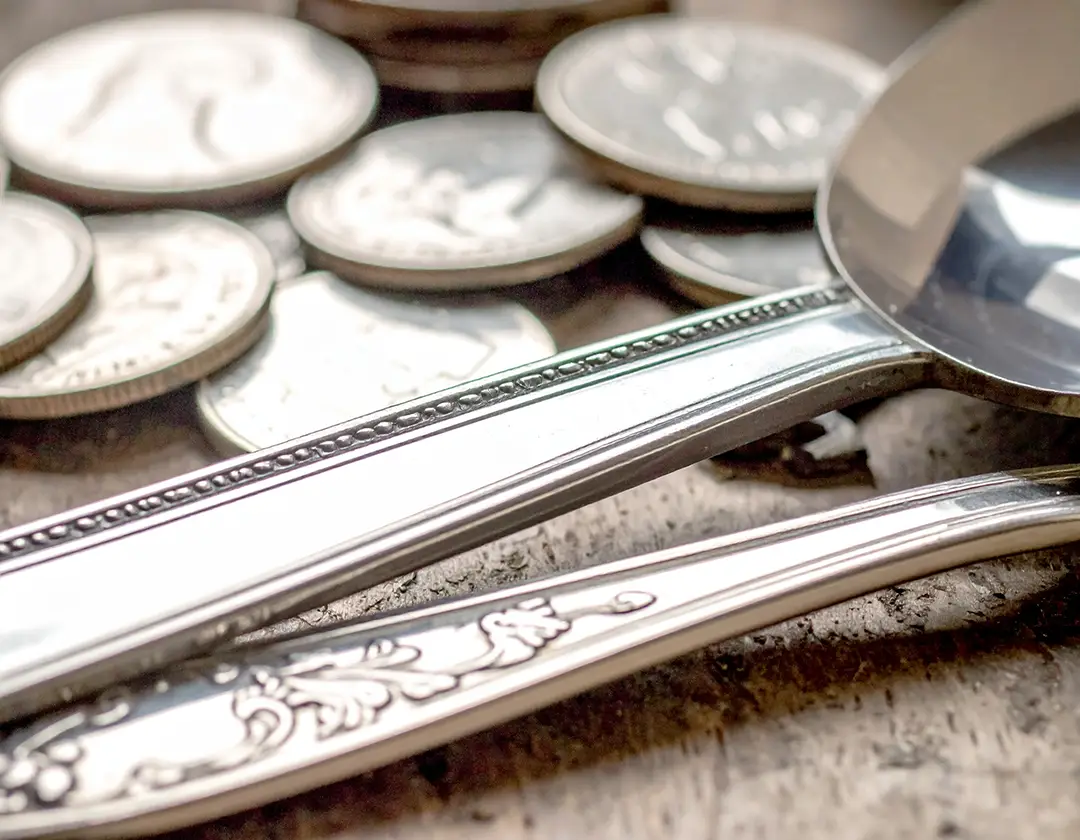
Since 1980, we’ve served Clearwater families with honesty and transparency in silver sales. We evaluate silver in front of you, explain how purity and weight affect value, and use a consistent daily market rate so you can sell with confidence.
As a family jeweler, we value long-term relationships over one-time transactions. Parents bring their children, and now grandchildren, because they know they’ll be treated with fairness and respect.
If you have silver you’re curious about, come see us. We’ll walk you through the evaluation in person and answer whatever questions come up.