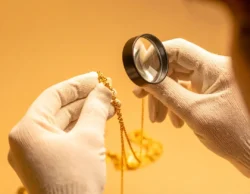
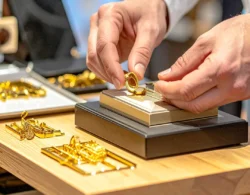
Gold has long symbolized wealth, love, and legacy. From heirloom wedding bands to treasured coins, its value goes beyond dollars and cents. Unfortunately, because gold has always been valuable, imitations are just as common. Knowing whether your piece is real gold not only helps you avoid confusion, but also gives you confidence when selling or insuring your items.
At Design One Jewelers, serving Clearwater and the greater Tampa Bay area since 1980, we have seen it all, from solid gold pieces passed down through families to plated items that owners thought were solid gold for years. Our role as a trusted family jeweler is to give you clarity and peace of mind about what you own.
Contents
The Basics: What Real Gold Looks and Feels Like
Before trying any tests, it helps to know the general qualities of authentic gold.
Consistent color
Real gold has a uniform, rich tone, whether yellow, white, or rose.
Substance
Gold is naturally dense, so genuine items feel heavier than they look.
Durability
While gold can scratch, it does not easily tarnish, rust, or corrode.
Identifying Gold Hallmarks and Stamps
Common Markings
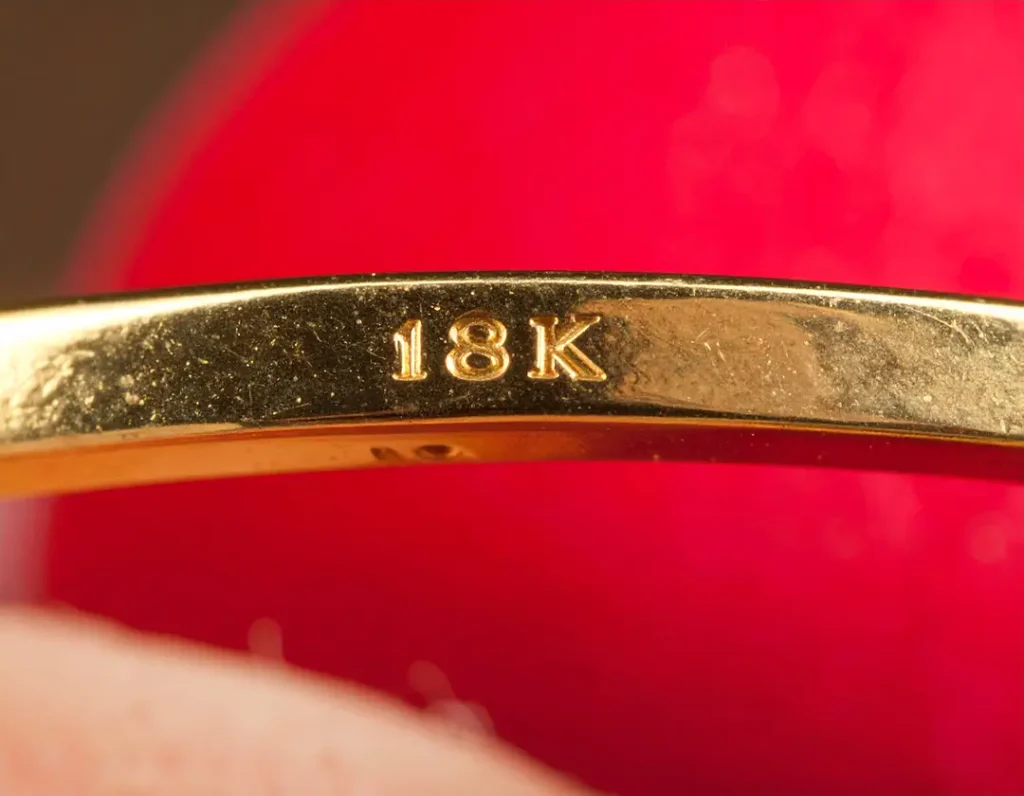
- Karat numbers: 10K, 14K, 18K, 22K, and 24K (the higher the number, the purer the gold).
- European equivalents: “333” (8K), “375” (9K), “585” (14K), “750” (18K), or “916” (22K).
- Other designations: “GF” for gold-filled, “HGE” for heavy gold electroplate, and “GP” for gold-plated.
Cautions
Faded Stamps
Wear and tear can blur markings, so if you can’t find a clear stamp, that doesn’t mean your gold isn’t real.
Forged Stamps
Some counterfeiters stamp plated items with “14K” to deceive buyers. This is why hallmark inspection should be paired with additional testing.
At-Home Clues and Tests
If you are curious about your gold before bringing it in for a professional evaluation, several safe at-home tests can give you insight.
The Magnet Test
Gold is not magnetic. If a strong magnet pulls your item, it is most likely not solid gold. Still, some base metals used in fakes are also non-magnetic, so this test is only a first step.
The Water Density Test
Place your item in a cup of water. Gold’s density makes it sink immediately. Lightweight fakes or hollow pieces may float or settle more slowly.
The Skin Test
Wearing gold jewelry rarely causes skin discoloration. If your skin turns green or black after wearing a ring or bracelet, the item may not be genuine gold. (Exceptions exist, such as reactions from alloys in lower-karat gold.)
Misconceptions About Gold
Many myths surround gold testing. Here are a few to be aware of:
Myth
Old jewelry is always real.
Fact
Fakes and plated items have been around for centuries. Age doesn’t guarantee authenticity.
Myth
If it’s heavy, it’s gold.
Fact
Some base metals like tungsten are very heavy, and counterfeiters sometimes use them to mimic gold’s weight.
Myth
Pure gold is always best.
Fact
While 24K is the purest form, it is soft and not always ideal for everyday wear. Many people prefer 14K or 18K for strength and durability.
Professional Testing Methods
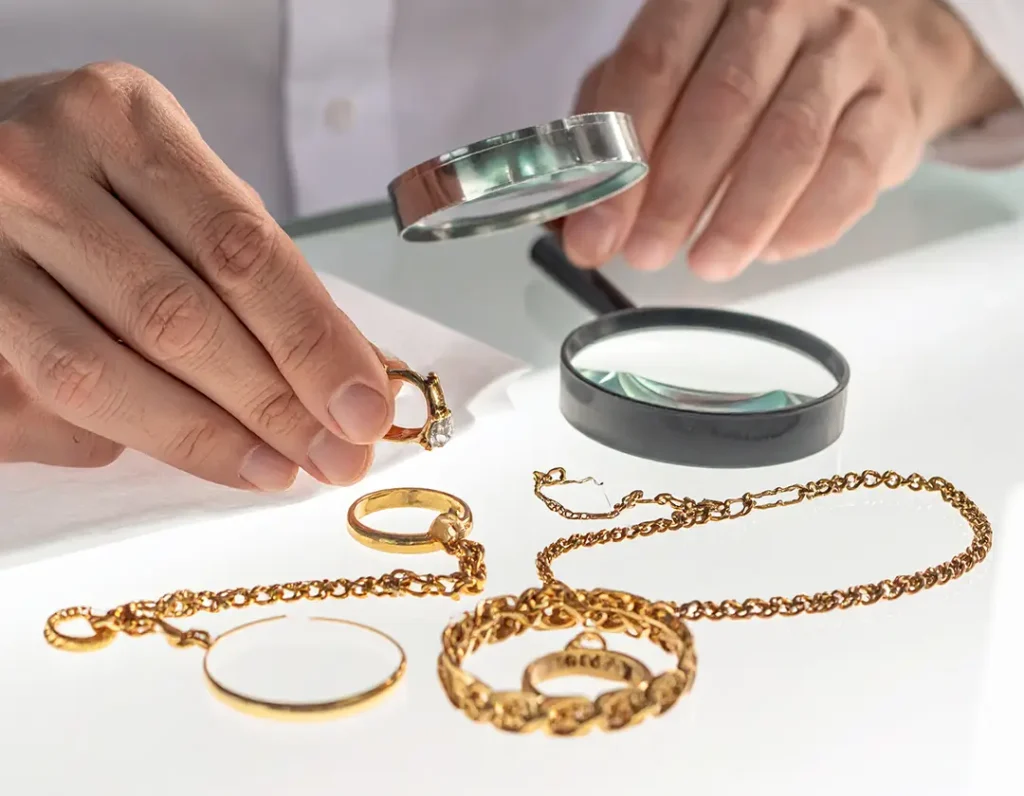
While at-home tests can provide clues, only a jeweler with the right tools and experience can give you certainty about your gold’s authenticity and value. At Design One Jewelers, we rely on time-tested methods and four decades of expertise to deliver clear, accurate evaluations.
Acid Testing: A Reliable Standard
One of the most common and dependable methods we use is acid testing. A jeweler places a small drop of testing solution on a discreet scratch made on the surface of your piece. Different gold purities (10K, 14K, 18K, etc.) react in different ways, which allows us to verify whether the item’s markings match its true composition. This test, when performed by an experienced jeweler, provides a reliable indication of authenticity without causing noticeable damage to the piece.
Electronic Testing
Modern electronic devices test conductivity and provide an accurate reading of the gold’s karat without scratching or damaging the item.
X-Ray Fluorescence (XRF) Analysis
This advanced, non-invasive method scans the surface and determines the exact composition of the piece, giving precise results for both purity and alloy content.
Each method has strengths, and when combined, they provide complete confidence in the results.
Why Experience Matters
Gold testing isn’t just about chemicals – it’s about interpretation. A less experienced buyer might misread results, undervaluing your jewelry or coins. Paul and Roz have been working with gold, silver, and coins since 1980, and that knowledge makes a difference. We know the hallmarks of genuine pieces, the common tricks used in fakes, and the subtle signs of value that others may overlook.
The Comfort of Local Trust
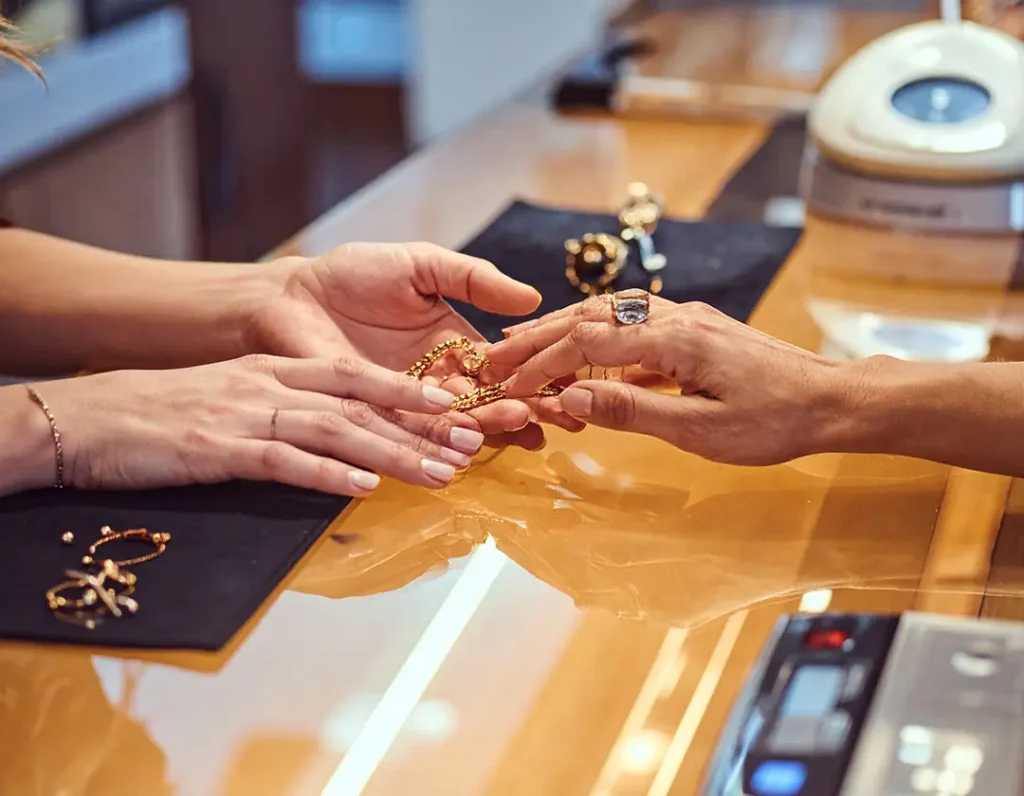
Unlike online “cash for gold” websites or hotel buyers who disappear after a weekend, Design One Jewelers has been part of the Clearwater community for nearly 46 years. When you bring us your jewelry or coins, the evaluation happens in front of you. You never lose sight of your valuables, and you leave with clarity about what you own.
Always have your gold tested in front of you. A trusted jeweler ensures your items stay secure during evaluation, so you walk away with confidence in both the process and the results.
More Than Just Selling
Even if you are not ready to sell, knowing whether your gold is genuine can be helpful for estate planning, insurance, or simply peace of mind. We also offer options beyond selling, such as appraisals, repairs, or redesigning outdated jewelry into something you’ll love to wear again.
Even if you are not ready to sell, getting your gold evaluated is smart for estate planning and insurance purposes. Knowing what you own helps protect your family’s future.
If you are considering selling, you can learn more on our Gold, Metals and Coins page, or explore our article Sell Gold in Clearwater: Why Locals Trust Us for insights into how we establish fair value and why customers continue to choose us over less reliable options.
Options beyond selling
Even if you are not ready to part with your gold, we can help with appraisals, repairs, or redesigning a piece into something new.
FAQs
How do jewelers know gold is real?
Professional jewelers use acid testing, electronic testers, and advanced tools like XRF to analyze metal composition. These tests confirm authenticity far more accurately than at-home methods.
Is white gold real gold?
Yes. White gold is made by alloying pure gold with metals like nickel or palladium, then often coated with rhodium for shine. It is just as genuine as yellow or rose gold.
Can coins be faked as easily as jewelry?
Unfortunately, yes. Counterfeit coins are common. Authentic silver and gold coins are usually stamped with weight, purity, and mint marks. A jeweler can test them to confirm.
I inherited jewelry but don’t know if it’s real. Should I bring it in?
Yes. Professional evaluation is the safest way to determine authenticity and understand its value, especially before dividing assets in estate planning.
What’s the difference between gold-filled and gold-plated?
Gold-filled items have a thicker bonded layer of gold compared to plated items, which use only a thin coating. Both are less valuable than solid gold.
Can I test gold with vinegar or bleach?
We do not recommend this. While you may find such tips online, harsh chemicals can be dangerous to you and permanently damage jewelry. It’s best to avoid them and seek professional testing.
Where can I sell my gold once it’s confirmed real?
Your safest choice is a reputable jeweler like Design One Jewelers, where you’ll receive a fair and transparent offer.
Knowing whether your gold is real gives you control over your investment, your jewelry box, and your peace of mind. While simple checks at home can provide hints, professional testing ensures certainty.
At Design One Jewelers, we combine nearly five decades of family tradition with modern testing methods to help our Clearwater community make informed decisions. Whether you plan to sell, insure, or simply wear your jewelry with confidence, you can trust us to guide you every step of the way.